

Common Oil Painting Mediums Explained — Uses, Techniques, and Best Applications
May 29, 2026

We may earn a commission if you make a purchase through one of our links. Learn more

See what more Amazon brings to you!

Banner promoting Amazon Outlet with overstock items offered at greatly reduced prices.

Oil painting mediums can dramatically change the way paint handles, dries, blends, and appears on the canvas. Some mediums improve flow and glazing, while others speed drying time, build texture, or create smoother brushwork.

For many artists, choosing the right medium can feel overwhelming at first. Traditional oils, solvents, alkyds, gels, and wax mediums all behave differently depending on the painting style and technique being used.

This practical guide explains many of the most commonly used oil painting mediums, what they do, how artists typically use them, and the painting methods where they perform best.

Beginner-Friendly Essential Mediums

Refined Linseed Oil

What It Is
Refined linseed oil is one of the most commonly used traditional oil painting mediums. It increases paint flow, improves brush movement, and adds richness and gloss to paint layers.

Historical Background
Linseed oil has been used in oil painting for centuries and became one of the primary binders during the Northern Renaissance. Painters such as Rembrandt and Peter Paul Rubens worked extensively with oil-rich painting methods that relied heavily on linseed-based mediums.

Bottle of refined linseed oil beside a painter’s palette with warm earth-tone oil paints and worn filbert brushes in an artist studio
Refined linseed oil displayed beside a paint-covered palette, medium cup, and well-used brushes in a warm artist studio setting.

What It Does
Refined linseed oil improves paint flow, increases gloss and color richness, extends blending time, and helps strengthen the paint film.

Best Used For
This medium performs especially well in general oil painting, traditional layered techniques, smooth blending, and controlled brushwork applications.

Common Pairings         
Refined linseed oil is commonly paired with OMS for lean mixtures, stand oil for glazing techniques, and traditional underpainting methods.

Important Notes
Excessive amounts may slow drying significantly and can increase yellowing in lighter paint passages over time. It is generally best used gradually in upper layers while following fat-over-lean painting principles.

Odorless Mineral Spirits (OMS)

What It Is                                   
Odorless mineral spirits are solvent-based thinners used to dilute oil paint and clean brushes during painting sessions.

Historical Background
Modern OMS products became popular during the twentieth century as artists searched for safer alternatives to traditional turpentine while still maintaining effective paint thinning and studio cleaning performance.

Bottle of Gamsol odorless mineral spirits beside thin oil paint washes, stained shop towels, and artist brushes in a traditional painting studio
Gamsol odorless mineral spirits displayed beside thin underpainting washes, stained shop towels, brushes, and a painter’s palette in a working artist studio.

What It Does
OMS quickly thins paint, speeds surface drying, creates lean paint layers, and improves paint flow during underpainting stages.

Best Used For                        
This solvent is commonly used for blocking in, underpainting, initial sketch layers, and brush cleaning during painting sessions.

Common Pairings
OMS is frequently paired with linseed oil, alkyd mediums, and lean underpainting mixtures.

Important Notes
Excessive solvent use can weaken paint adhesion and create overly thin paint films. OMS is generally better suited for early lean layers rather than final upper paint applications.

Liquin

What It Is
Liquin is a modern alkyd painting medium designed to speed drying time while improving paint flow and leveling.

Historical Background
Introduced by Winsor & Newton, Liquin became widely adopted by contemporary studio painters because it allowed layered oil paintings to dry far faster than traditional oil-only methods.

Bottle of Liquin Original beside a wooden artist palette with realistic oil paint mixtures and a partially completed landscape painting in a studio
Liquin Original displayed beside a painter’s palette with realistic landscape color mixtures, brushes, and a partially completed oil painting in a natural studio setting.

What It Does
Liquin accelerates drying time, improves paint flow, reduces visible brush marks, and creates durable paint layers.

Best Used For
This medium performs especially well in layered painting, glazing, faster studio workflows, and paintings completed across multiple sessions.

Common Pairings
Liquin is commonly paired with traditional oil paints, OMS, and thin glazing applications.

Important Notes
Overuse may create an artificial surface appearance or overly slick finish. Controlled amounts generally produce the best results, especially for artists struggling with slow drying paint.

Traditional & Classical Painting Mediums

Stand Oil

What It Is
Stand oil is a thick, heat-polymerized linseed oil known for producing smooth brushwork, glossy finishes, and luminous glazing effects.

Historical Background
Stand oil became widely used by European painters during the Renaissance and Baroque periods because of its ability to produce smooth enamel-like paint layers with fewer visible brush marks. Variations of oil-rich glazing techniques became associated with artists such as Jan van Eyck and many later academic painters.

Bottle of stand oil beside transparent glaze mixtures, soft blending brushes, and a classical portrait painting in an artist studio
Stand oil displayed beside transparent glaze mixtures, soft blending brushes, and a classical-style portrait painting in a traditional studio setting.

What It Does
Stand oil reduces visible brush marks, improves paint leveling, increases gloss, and extends blending time for smoother paint applications.

Best Used For
This medium excels in glazing, portraiture, classical realism, and fine indirect painting techniques requiring smooth transitions.

Common Pairings        
Stand oil is commonly paired with OMS, damar varnish, and traditional glazing mixtures.

Important Notes
Excessive use may wrinkle upper paint layers or create overly slick surfaces. It is generally best reserved for upper fat layers and controlled glazing applications.

Walnut Oil

What It Is         
Walnut oil is a smoother, slower-drying oil medium valued for its pale color and reduced yellowing compared to linseed oil.

Historical Background
Walnut oil was commonly used by Renaissance painters in lighter passages and delicate color work because it resisted yellowing more effectively than heavier linseed oils.

Bottle of walnut oil beside a wooden painting palette with pale blue-gray oil paint mixtures, paint-stained brushes, and a mountain landscape painting on a MEEDEN easel.
Walnut oil used for smooth blending and subtle pale blue-gray transitions beside a cool-toned mountain landscape painting in progress.

What It Does
Walnut oil improves smooth blending, reduces yellowing, extends workable paint time, and softens brush drag during painting.

Best Used For                            
This medium performs especially well in portrait painting, light palettes, wet blending, and delicate glazing techniques.

Common Pairings
Walnut oil is frequently paired with soft synthetic brushes, controlled glazing methods, and limited-palette painting approaches.

Important Notes
Walnut oil dries slower than linseed oil and may remain tacky longer in thicker applications. Many artists favor it for smooth flesh-tone blending and softer brush movement.

Modern Alkyd & Fast-Drying Mediums

Galkyd         

What It Is
Galkyd is an alkyd resin medium designed to speed drying while maintaining smooth paint flow and durable paint films.

Historical Background
Developed by Gamblin, Galkyd became popular among contemporary oil painters seeking faster drying times without sacrificing traditional oil painting appearance and handling.

Bottle of Gamblin Galkyd medium beside a wooden artist palette with neutral earth-tone oil paints, blending brushes, and a drying landscape painting on a floor easel in a rustic studio workspace.
Gamblin Galkyd medium displayed beside a partially dried landscape oil painting, showing how fast-drying alkyd mediums are commonly used to accelerate drying time while maintaining smooth glazing and layered brushwork.

What It Does
Galkyd speeds drying, improves paint leveling, enhances gloss, and helps create durable paint layers.

Best Used For                          
This medium performs especially well in glazing, layered painting, faster studio production, and thin smooth paint applications.

Common Pairings
Galkyd is commonly paired with traditional oil paints, OMS, and fine glazing layers.

Important Notes
Because Galkyd dries faster than traditional oil-only mixtures, moderate use usually produces the best handling and surface appearance. It is especially useful for artists working on multiple paintings simultaneously.

Neo Megilp

What It Is
Neo Megilp is a modern gel-like alkyd medium designed to imitate the handling qualities of traditional historical painting mediums while improving long-term stability.

Historical Background
Neo Megilp was developed as a safer and more stable alternative to older megilp formulas historically used by nineteenth-century painters seeking buttery paint handling and smoother blending characteristics.

Bottle of Gamblin Galkyd Lite medium beside a portrait oil painting, painter's palette, blending brushes, and paint-stained studio tools.
Gamblin Galkyd Lite medium displayed beside a portrait oil painting with smooth blended transitions and controlled glazing. Galkyd Lite is the modern name for Gamblin's former Neo Megilp medium, offering the same silky handling qualities while helping artists achieve faster drying times and soft brushwork effects.

What It Does
Neo Megilp improves paint flow, softens brush drag, enhances blending, and moderately accelerates drying.

Best Used For
This medium performs especially well in portrait painting, smooth brushwork, painterly realism, and controlled blending applications.

Common Pairings
Neo Megilp is commonly paired with soft filbert brushes, traditional oil paints, and glazing techniques.

Important Notes
Controlled amounts generally provide the best handling performance. Many artists appreciate Neo Megilp as a balance between traditional paint feel and modern drying efficiency.

Texture & Specialty Mediums

Cold Wax Medium

What It Is              
Cold wax medium is a soft wax-paste additive used to create matte surfaces, textured brushwork, and layered painterly effects.

Historical Background
Wax-based painting additives trace back to ancient encaustic painting traditions, though modern cold wax mediums became especially popular among contemporary abstract and texture-focused painters.

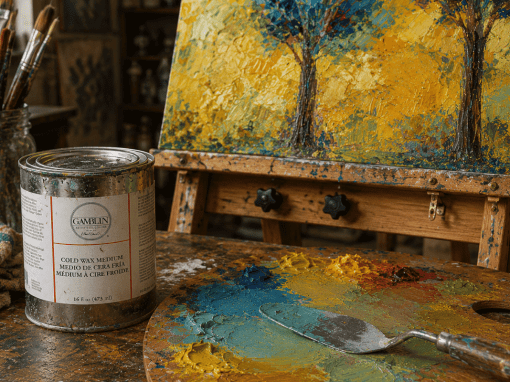
Cold wax medium beside a textured oil painting on a wooden easel with palette knife mixed paint and thick impasto color transitions in an artist studio.
Gamblin Cold Wax Medium being blended into oil paint with a palette knife to create thick texture, matte surfaces, and layered impasto effects for expressive abstract landscape painting.

What It Does
Cold wax medium adds texture and body, creates matte finishes, increases paint drag, and builds layered surface effects.

Best Used For
This medium excels in palette knife painting, contemporary abstraction, heavy texture work, and layer scraping techniques.

Common Pairings
Cold wax medium is frequently paired with palette knives, heavy-body oil paints, and impasto painting methods.

Important Notes                                                                                                          
Excessive amounts may weaken the paint film or create unstable layers. Moderate controlled use generally produces the strongest surface results and handling characteristics.

Oleogel

What It Is         
Oleogel is a thick gel medium designed to increase paint body and texture while maintaining good flexibility and paint adhesion.

Historical Background
Modern gel mediums such as Oleogel became increasingly popular among contemporary oil painters looking for safer and more flexible alternatives to heavy wax or resin-based impasto mediums.

Impasto-style oil painting of water lilies displayed on a wooden tabletop easel beside Rublev Oleogel medium and a paint palette filled with thick colorful oil paint mixtures.
Rublev Oleogel medium beside a heavily textured impasto oil painting demonstrating thick palette knife applications, raised paint ridges, and rich color blending commonly used in expressive oil painting techniques.

What It Does
Oleogel builds heavy texture, increases paint body, retains visible brush and knife marks, and improves impasto control.

Best Used For
This medium performs especially well in impasto painting, palette knife work, expressive brushwork, and heavy texture applications.

Common Pairings           
Oleogel is commonly paired with stiff bristle brushes, palette knives, and heavy-body oil paints.

Important Notes
Thick paint layers may still require extended drying times even when using gel mediums. Oleogel is especially useful for artists seeking strong visible texture without excessively oil-rich mixtures.

Which Oil Painting Medium Should You Use?

Painting Goal Recommended Medium
Faster drying
Liquin or alkyd mediums
Smooth glazing
Stand oil
Minimal yellowing
Walnut oil
Heavy texture
Cold wax or Oleogel
Long blending sessions
Walnut or poppy oil
Classical realism
Stand oil glazing mixtures
Matte painterly effects
Cold wax medium

Common Mistakes When Using Oil Painting Mediums

  • Using excessive solvent in upper layers
  • Applying thick oil-rich paint over unstable lean layers
  • Overusing fast-drying alkyd mediums
  • Mixing incompatible mediums excessively
  • Applying damar-heavy mixtures too thickly
  • Using more medium than paint

Understanding how mediums affect paint structure, drying, flexibility, and adhesion can help artists avoid many common oil painting problems before they begin.

Final Thoughts

Oil painting mediums are designed to help artists control paint behavior, surface quality, drying speed, texture, and blending characteristics. The best medium often depends less on the product itself and more on the painting style, workflow, and visual effects an artist wants to achieve.

Many painters eventually develop a small group of preferred mediums that match the way they work. Learning how each medium behaves through direct studio practice is one of the best ways to improve confidence and consistency in oil painting.

Consider experimenting gradually with different mediums while paying close attention to drying behavior, layering structure, and overall paint handling.

Explore More

Disclaimer

This page may contain Amazon advertisements or affiliate links; however, the article content itself is not sponsored by or affiliated with Amazon. Product availability and pricing, where shown, are provided for general informational purposes and may vary over time. All information reflects conditions at the time of posting and is subject to change without notice.

Banner promoting art supplies on Amazon including paints, brushes, and creative materials.

You May Also Like…